Clint Black Delivers Sold-Out Night of Country Classics, Stories at Jackpot Junction
Amy Zents
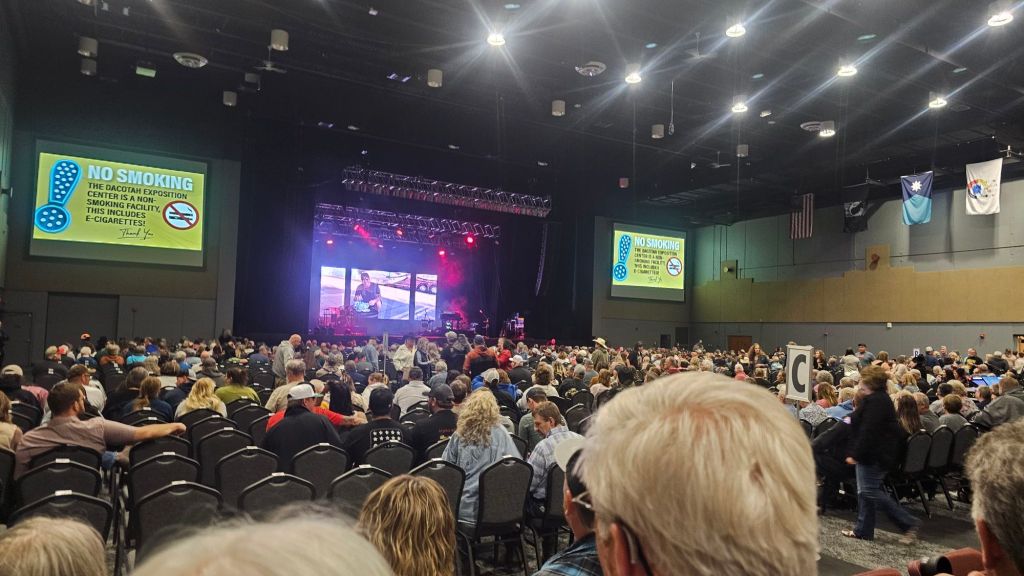
JACKPOT JUNCTION, Minn. — Clint Black turned a sold-out crowd into a singalong family Thursday night at Jackpot Junction, blending decades of hits with fresh material and the easy storytelling that has defined his career.
The Minnesota stop on Black’s tour drew a packed house eager for the Texas native’s signature mix of traditional country and heartfelt ballads. From the opening notes, Black’s rich baritone filled the venue, proving age has not dimmed the voice that made him a 1990s superstar.
Black, backed by a tight six-piece band, opened with crowd favorites that had fans on their feet early. He quickly settled into a rhythm that mixed familiar radio staples with deeper cuts. Longtime collaborator Hayden Nicholas joined him on stage for several numbers, including songs they wrote nearly 40 years ago. The easy chemistry between the two underscored Black’s roots as a songwriter first.
One of the evening’s highlights came when Black paid tribute to Merle Haggard. He recounted how Johnny Cash inspired the young Haggard during a prison performance at San Quentin, then delivered Haggard’s “Mama Tried” with quiet reverence. The room grew still before erupting in applause.
Midway through the set, Black slowed the pace for emotional ballads such as “When I Said I Do.” He joked about skipping the “dance numbers and wardrobe changes” that mark more theatrical shows, drawing chuckles from an audience that clearly preferred the no-frills approach. “I can’t do that,” he said with a grin. “It’s hard for me to understand you with these things in my ears and your funny accent.”
Black shared several anecdotes that brought the audience closer. He described proving his father wrong at age 22 by writing his own material, then launched into a barroom classic about longnecks, steel guitars and sawdust floors. Another story referenced an Albert Einstein quote about using only 10 percent of the brain, leading into the witty “Nobody’s Home.” Fans leaned forward as Black explained songwriting inspirations drawn from everyday life.
The band earned its own spotlight. Black introduced each member with humor: bassist Jake Rulon-Meade, who has shared the stage with him for nearly 40 years; multi-instrumentalist Jason Murray on fiddle, acoustic guitar, dobro and lap steel; drummer Andy Hall; keyboardist Dwayne Rowe; and his cousin Wes Bauer on acoustic guitar and pedal steel. Their versatility shone on instrumental breaks that ranged from soaring fiddle solos to driving rhythms.
Later, Black premiered a new song co-written with the artist known as Ernest. The upbeat “The Devil Doesn’t Live Here Anymore” drew especially warm applause from fans navigating their own life changes. He also reached back to his 2015 album “On Purpose” for the title track-inspired “Better and Worse,” a self-aware reflection on life’s ups and downs that showcased his knack for clever wordplay.
Signature hits such as “Killin’ Time” brought the entire venue to its feet. Black closed strong with a Waylon Jennings cover that nodded to the outlaw spirit, complete with swelling pedal steel and driving energy. The encore featured thunderous applause and a heartfelt thank-you to the crowd.
Throughout the night, production stayed straightforward: strong sound, mood-appropriate lighting and projected career photos. The intimate venue setting made even upper-level seats feel close to the action.
Black’s performance reminded the crowd why he remains a cornerstone of country music. At a time when the genre sometimes chases trends, he stays rooted in authentic songwriting, sharp musicianship and direct engagement. The sold-out show delivered exactly what fans wanted: memorable songs, engaging stories and the timeless sound of real country.
For those in attendance, it was more than a concert. It was a celebration of an artist who still loves what he does, and proves it every time he steps on stage.