Clint Black Delivers Sold-Out Night of Country Classics, Stories at Jackpot Junction

Clint Black Delivers Sold-Out Night of Country Classics, Stories at Jackpot Junction

Amy Zents

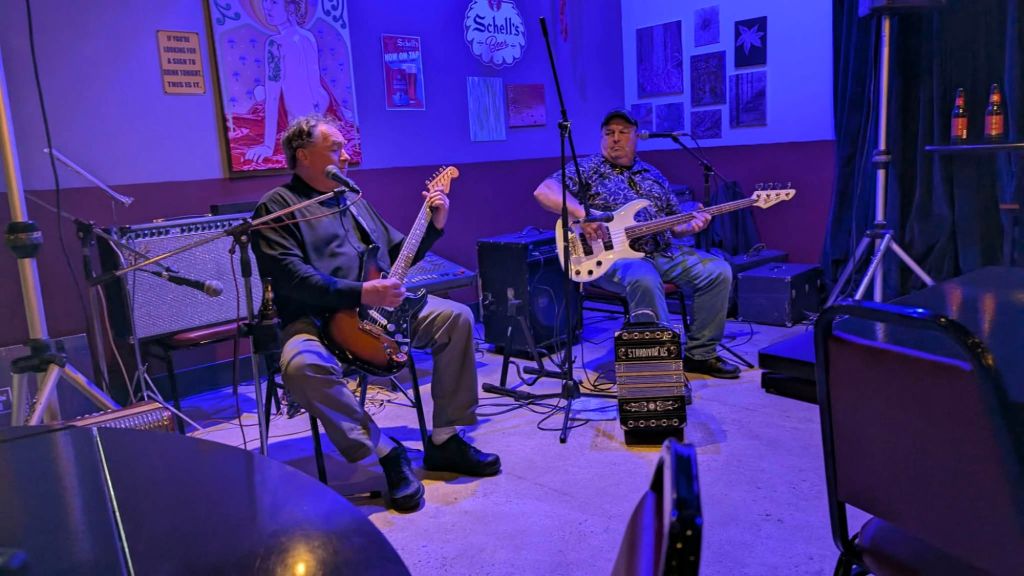
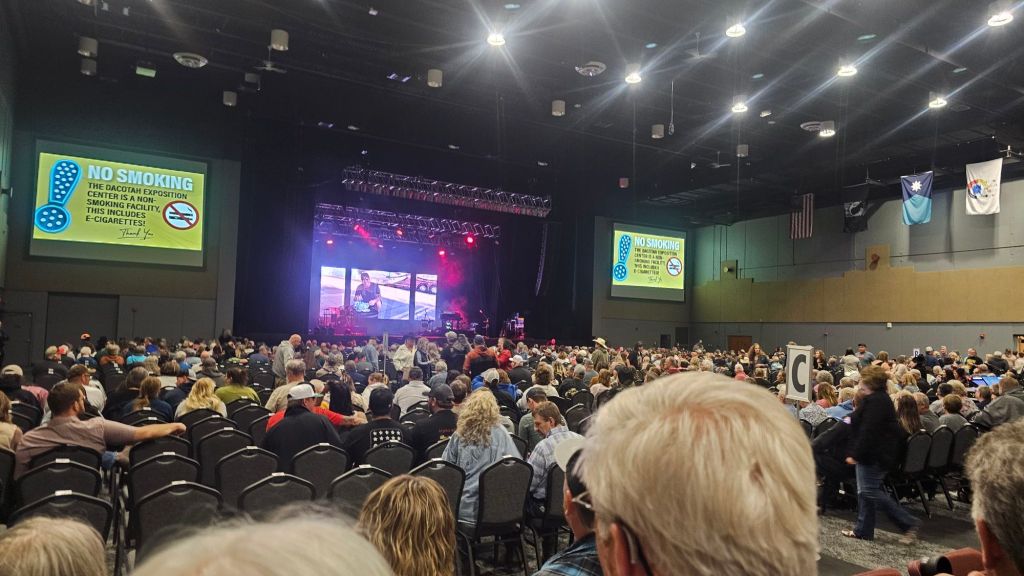
JACKPOT JUNCTION, Minn. — Clint Black turned a sold-out crowd into a singalong family Thursday night at Jackpot Junction, blending decades of hits with fresh material and the easy storytelling that has defined his career.

The Minnesota stop on Black’s tour drew a packed house eager for the Texas native’s signature mix of traditional country and heartfelt ballads. From the opening notes, Black’s rich baritone filled the venue, proving age has not dimmed the voice that made him a 1990s superstar.

Black, backed by a tight six-piece band, opened with crowd favorites that had fans on their feet early. He quickly settled into a rhythm that mixed familiar radio staples with deeper cuts. Longtime collaborator Hayden Nicholas joined him on stage for several numbers, including songs they wrote nearly 40 years ago. The easy chemistry between the two underscored Black’s roots as a songwriter first.

One of the evening’s highlights came when Black paid tribute to Merle Haggard. He recounted how Johnny Cash inspired the young Haggard during a prison performance at San Quentin, then delivered Haggard’s “Mama Tried” with quiet reverence. The room grew still before erupting in applause.

Midway through the set, Black slowed the pace for emotional ballads such as “When I Said I Do.” He joked about skipping the “dance numbers and wardrobe changes” that mark more theatrical shows, drawing chuckles from an audience that clearly preferred the no-frills approach. “I can’t do that,” he said with a grin. “It’s hard for me to understand you with these things in my ears and your funny accent.”

Black shared several anecdotes that brought the audience closer. He described proving his father wrong at age 22 by writing his own material, then launched into a barroom classic about longnecks, steel guitars and sawdust floors. Another story referenced an Albert Einstein quote about using only 10 percent of the brain, leading into the witty “Nobody’s Home.” Fans leaned forward as Black explained songwriting inspirations drawn from everyday life.

The band earned its own spotlight. Black introduced each member with humor: bassist Jake Rulon-Meade, who has shared the stage with him for nearly 40 years; multi-instrumentalist Jason Murray on fiddle, acoustic guitar, dobro and lap steel; drummer Andy Hall; keyboardist Dwayne Rowe; and his cousin Wes Bauer on acoustic guitar and pedal steel. Their versatility shone on instrumental breaks that ranged from soaring fiddle solos to driving rhythms.

Later, Black premiered a new song co-written with the artist known as Ernest. The upbeat “The Devil Doesn’t Live Here Anymore” drew especially warm applause from fans navigating their own life changes. He also reached back to his 2015 album “On Purpose” for the title track-inspired “Better and Worse,” a self-aware reflection on life’s ups and downs that showcased his knack for clever wordplay.

Signature hits such as “Killin’ Time” brought the entire venue to its feet. Black closed strong with a Waylon Jennings cover that nodded to the outlaw spirit, complete with swelling pedal steel and driving energy. The encore featured thunderous applause and a heartfelt thank-you to the crowd.

Throughout the night, production stayed straightforward:  strong sound, mood-appropriate lighting and projected career photos. The intimate venue setting made even upper-level seats feel close to the action.

Black’s performance reminded the crowd why he remains a cornerstone of country music. At a time when the genre sometimes chases trends, he stays rooted in authentic songwriting, sharp musicianship and direct engagement. The sold-out show delivered exactly what fans wanted: memorable songs, engaging stories and the timeless sound of real country.

For those in attendance, it was more than a concert. It was a celebration of an artist who still loves what he does, and proves it every time he steps on stage.

MSU Mankato Celebrates 100 Years of The Reporter

MSU Mankato Celebrates 100 Years of The Reporter


By Amy Zents

MANKATO, Minn. — Minnesota State University, Mankato, celebrated the centennial of its student newspaper, The Reporter.
The event focused on the publication’s role in preserving campus history and fostering civic discourse. More than 3,500 local newspapers have closed nationwide in the past two decades.
President Edward Inch opened the recent event by urging current student journalists to uphold high standards.
“Set the bar so a hundred years from now, the people talking here will be so proud of what it is you’ve done,” Inch said.
Founded in 1926, The Reporter has chronicled MSU Mankato’s evolution through the Great Depression, World War II, the Korean and Vietnam wars, and key campus moments including a visit by Dr. Martin Luther King Jr. The paper has repeatedly won awards from the Minnesota Newspaper Association in open competition with professional outlets.
Acting Vice President for Student Affairs and Enrollment Management Brian Jones, Ed.D., credited his early work on The Reporter — including collaborations with the Mankato Free Press — with building skills in critical thinking, ethical reporting and community engagement that shaped his leadership career.
Brian Zins, director of alumni relations, described the newspaper as “enduring connective tissue” linking more than 140,000 living MSU Mankato graduates across generations and strengthening institutional loyalty.
Editor-in-Chief Anahí Zúñiga, who joined as a reserved freshman in fall 2023, said the newsroom transformed her into a confident leader.
“When you go to The Reporter, you find your people,” Zúñiga said.
University leaders described The Reporter as a counter to unverified digital content, training informed citizens and safeguarding an accurate historical record for Minnesota’s largest state university system.

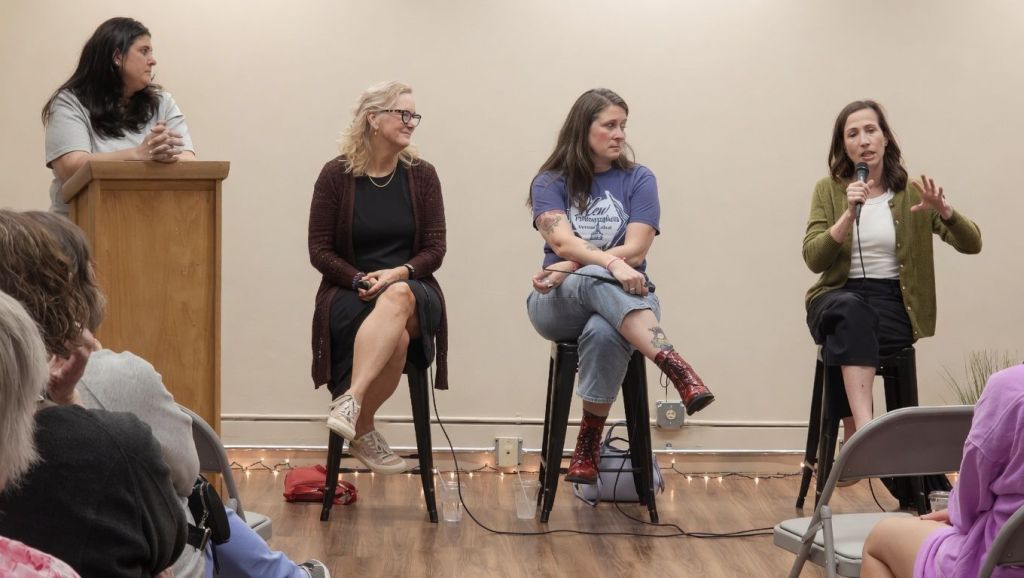
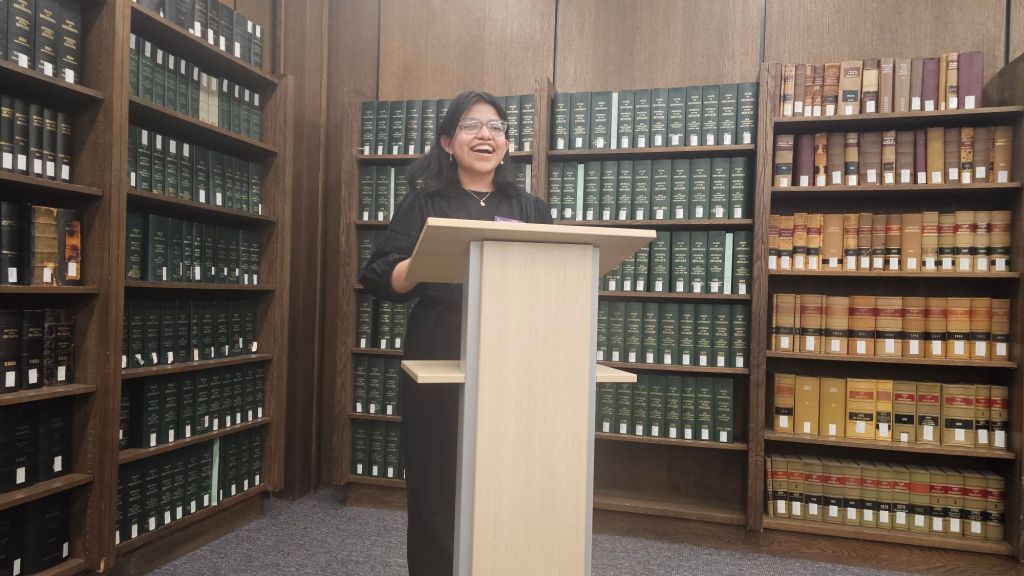
Anahí Zúñiga, editor-in-chief of The MSU Reporter, speaks during the newspaper’s centennial celebration, reflecting on how student journalism shaped her confidence, leadership, and sense of community on campus.

Amy Zents Photo-journalist

2026 Minnesota-based senior broadcast-media specialist and photo-journlist

Check my portfolio here

Amy Zents’s Journalist Portfolio | Muck Rack https://share.google/4r11CxOFuxSC3W5sY

Gone off “Gone with the Wind”

When you look past the sweeping romance and the iconic cinematography, Gone With the Wind is really a character study and a tragedy. Scarlett O’Hara may be beautiful and adored, but she’s also deeply selfish, manipulative, and profoundly narcissistic. In many ways, she mirrors a certain modern archetype: ambitious, self‑centered, and willing to bend people to her will. That’s part of why the story still resonates today.
People recognize her.
People know her.
And people are still fascinated by her.
Despite being marketed as a grand love story, the film is ultimately about the consequences of pride, obsession, and emotional blindness. Scarlett spends the entire story chasing what she can’t have, ignoring what she does, and losing everything that truly mattered in the process.
In that sense, Gone With the Wind isn’t a romance at all, it’s a tragedy wrapped in beautiful costumes and unforgettable performances.

🌟 Reliving the Magic of the Annual German-Bohemian Society Meeting! 🌟

https://www.nujournal.com/news/local-news/2026/02/24/history-of-a-heritage/

Tiny Print Tyranny

© 2026 Amy Zents

Tiny Print Tyranny

I have officially reached my limit with Instagram reels. If I have to scroll down to the bottom of a reel and squint at microscopic print just to get the “real message,” I’m out. I’m not doing homework for your video.

And the second your reel has a finger pointing down — you know the one — telling me to “read the tiny print”… absolutely not. I’m not zooming, squinting, or decoding your secret life rules hidden under a looping clip that won’t stop replaying.

Influencers, hear me: if you want me to know something, put it where my eyeballs actually are. Because the moment your reel says “scroll down… look down… keep watching…” I’m already gone. 🚪💨
© 2026 Amy Zents

Literary Pilgrimage: Mark Twain’s America

By Amy Zents

© 2026 Amy Zents. All rights reserved.

📚🪶  During a trip to Missouri, I visited the Mark Twain Boyhood Home & Museum in Hannibal, the river town that shaped Samuel Langhorne Clemens, better known as Mark Twain, one of America’s most enduring writers and voices.
Twain is best remembered for The Adventures of Tom Sawyer and Adventures of Huckleberry Finn, novels that did far more than entertain. Through humor, satire, and the lens of childhood along the Mississippi River, he exposed hypocrisy, racism, moral cowardice, and the contradictions at the heart of American life. Huckleberry Finn in particular remains one of the most debated, and taught, novels in U.S. literature, praised for its unflinching portrayal of slavery and conscience.
But before Twain became a literary giant, he was a journalist working as a newspaper reporter, editor, and correspondent. That training shows. His writing is observant, economical, sharp, and grounded in real people and real places. He also worked as a printer, riverboat pilot, lecturer, essayist, and social critic, drawing from lived experience rather than romantic myth.
His nonfiction works including, Life on the Mississippi, Roughing It, The Innocents Abroad, and countless essays that blend reportager with wit, skepticism, and a reporter’s instinct to question power and convention. Twain didn’t just tell stories; he interrogated the world around him, often using humor as a scalpel.
Walking through the museum in Hannibal, you can see how deeply place mattered to his work. The river, the town, the social divisions—these weren’t backdrops. They were engines of insight. Twain’s legacy isn’t nostalgia; it’s curiosity, dissent, and a refusal to look away.
For writers, journalists, and readers alike, it’s a reminder that great storytelling often begins with paying attention and telling the truth, even when it’s uncomfortable.

🔗 https://marktwainmuseum.org/

MarkTwain #AmericanLiterature #JournalismHistory #HannibalMO #LiteraryPilgrimage #WriterLife #Photojournalism #BooksThatMatter 📖✍️🪶

When robots replace humans

When robots replace humans

By Amy Zents

Amazon plans to replace hundreds of thousands of warehouse workers with robots.

Internal documents show the company aims to automate up to 75% of warehouse tasks over the next decade.

Executives describe the shift as a move toward efficiency and higher-skilled jobs. Leaked details indicate the primary goal is reducing labor costs.

The changes extend beyond individual tasks. Communities that rely on Amazon warehouses for employment could see fewer job openings over time.

Workers who remain may be asked to retrain for roles in robot maintenance or logistics oversight. Not all employees will have access to these programs.

For Amazon, automation offers clear advantages. Robots cost less than human workers. They operate longer hours, require no wages or benefits, and typically produce fewer errors.

The broader economic effects are unclear. Towns dependent on warehouse employment may face financial challenges. Displaced workers could have difficulty finding comparable jobs.

The shift raises questions about the role of human labor in an increasingly automated economy.

Amazon has not publicly commented on the leaked documents.

https://www.theverge.com/news/803257/amazon-robotics-automation-replace-600000-human-jobs

Louie Anderson: A Comedy Legend’s Journey from Minnesota to Stardom

Louie Anderson: A Comedy Legend’s Journey from Minnesota to Stardom

By Amy Zents

When you think of comedians who made you feel like family, Louie Anderson immediately comes to mind. With his soft voice, warm demeanor, and uncanny ability to find humor in everyday family chaos, Louie became one of America’s most beloved entertainers.

From his humble beginnings in Saint Paul, Minnesota, to winning Emmy awards and breaking Guinness World Records, his journey is a testament to the power of authenticity, kindness, and clean comedy in an industry that often rewards the opposite.

Louis Perry Anderson was born on March 24, 1953, in Saint Paul, Minnesota. As the second youngest of eleven children, his household was a whirlwind of activity, noise, and sibling rivalry—the perfect training ground for a future comedian.

His father, Louis William Anderson, was a talented trumpeter who once played for Hoagy Carmichael but struggled with alcoholism, giving Louie material for more reflective comedy. He represented the complexity of family life—both its challenges and its humanity.

His mother, Ora Z. Anderson, a descendant of the Mayflower, was the heart of Louie’s comedy and greatest inspiration. She taught Louie how to find humor in hardship.

Growing up with ten siblings meant hand-me-down clothes that never quite fit, crowded dinner tables where seconds were fought over, and rivalries ranging from hilarious to heated. Louie credited all his siblings with shaping his resilience and providing the authentic material that resonated with millions.

His youngest brother, Thomas Anderson, who passed away in 2016, was even featured in Louie’s first major comedy special, Mom!, highlighting the family’s central role in his art.

By his late teens in the late 1970s, Louie was performing stand-up in Minnesota. His observations about family life, Midwestern upbringing, and everyday struggles quickly resonated with audiences.

Louie’s big break came when he appeared on The Tonight Show with Johnny Carson in 1984. The debut was so successful that Carson invited him back immediately—a rare honor signaling the arrival of a major talent.

His clean, observational style proved that humor didn’t need shock value to succeed. Louie’s dedication earned him a Guinness World Record for the longest career in stand-up comedy, spanning over four decades. From the late 1970s through the 2010s, he never stopped making people laugh.

One of Louie’s most significant achievements was creating Life with Louie, an animated series based on his childhood. He not only produced the show but also lent his distinctive voice to the main character—himself as a young boy.

His soft, gentle, and instantly recognizable voice brought humor and warmth to every episode, making the characters feel real and relatable. Beyond Life with Louie, Louie’s voice talent extended to other projects including The Adventures of Rocky and Bullwinkle, Aaahh!!! Real Monsters, and various guest roles in animated specials and voiceover commercials.

His ability to convey emotion, comedy, and nuance through voice alone was remarkable and made him a sought-after talent in animation. His voice was not just a tool—it was a signature of his warmth and relatability, instantly connecting with audiences of all ages.

Louie brought his warm, family-centered humor to Family Feud from 1999 to 2002, connecting naturally with contestants and audiences alike.

In FX’s Baskets (2016–2019), Louie played Christine Baskets, the hilariously over-the-top mother of Zach Galifianakis’s character. His performance earned him a Primetime Emmy Award and showcased his deep understanding of maternal figures, inspired by his own mother.

Louie also wrote books blending humor and heartfelt storytelling. Hey Mom: Stories for My Mother, But You Can Read Them Too was a humorous yet emotional collection, while Dear Dad: Letters from an Adult Child reflected on his complex relationship with his father.

These works offered readers a closer look at Louie, showing the man behind the microphone.

Louie’s soft, inviting voice was perfect for both stand-up and voice acting. His warm, approachable demeanor and willingness to embrace his size as part of his persona set him apart.

His clean, observational comedy rooted in family stories proved timeless. Louie proved that kindness, warmth, and clean humor could achieve lasting success in an industry that often favors shock and controversy.

Everything Louie did came back to family: childhood experiences, sibling rivalries, parent-child relationships, and the enduring love that persists despite imperfection.

Even with national fame, Louie remained connected to Saint Paul, returning often to celebrate his Midwestern roots—authenticity that audiences admired.

Louie actively supported charities focused on children’s welfare, family support services, and community programs. His generosity reflected the same values as his comedy: kindness, empathy, and a desire to make the world a better place.

Louie married twice in the 1980s; both marriages ended in divorce. Despite this, his commitment to family—blood and chosen—remained unwavering.

Comedy also served as therapy, helping him process his father’s alcoholism and turn hardship into humor. His mother remained his guiding inspiration throughout his life.

Louie Anderson’s impact on comedy extends far beyond laughs. He proved that kindness works, showing that warmth and authenticity can achieve lasting success.

His stories about family were universally relatable, and his self-acceptance—embracing his size, voice, and Midwestern roots—inspired countless others.

Through cross-medium storytelling spanning stand-up, television, books, animation, and voice work, he touched multiple generations.

At its core, Louie Anderson’s comedy was a love letter to his family. Every joke, story, and observation came from a place of deep love and appreciation.

Through decades of performing, Louie never lost sight of what mattered most: family, authenticity, and finding humor in everyday struggles.

Rest in peace, Louie Anderson (March 24, 1953 – January 21, 2022). Thank you for the laughter, the warmth, and for reminding us that family—with all its chaos—is what makes life worth living.

© 2025 Amalia Zents (publishing as Amy Zents). All rights reserved.

https://www.flickr.com/photos/beckhamandbloom/8261036785/

🌍 Behind the lens: Why travel vlogs make me worry 🎥

🌍 Behind the lens: Why travel vlogs make me worry 🎥

By Amy Zents

I love watching travel vloggers explore remote places—lush jungles, mountain villages, desert trails. Their footage is stunning, their curiosity contagious. But somewhere between the drone shots and the campfire chats, I start to worry.

What if they get injured? What if there’s no signal, no help, no one nearby who speaks their language? I’ve seen how quickly things can go wrong, even close to home. And many of these creators don’t have fixers, insurance, or backup teams. They’re brave, yes, but also vulnerable.

Maybe it’s the journalist in me. I think about liability, logistics, and the stories that never get told when something goes wrong. I wonder if they’ve signed waivers, mapped emergency routes, or even told someone where they’re going.

It’s not just about risk, it’s about responsibility. Who protects the storytellers when the story turns dangerous?

#TravelVloggers #BehindTheScenes #StorytellerSafety #RemoteTravel #JournalismMatters #EthicalStorytelling #AdventureAndRisk #SoloTravel #MediaResponsibility #ProtectTheStorytellers

Dark skies may loom for storytellers in isolated areas