
By Amy Zents
YouTube viewing reveals eerie parallels between ‘The Ninth Guest’ and ‘And Then There Were None’
By Amy Zents
Journal contributor
https://youtu.be/gx9Jtug7Qt0?si=C89bmDw9oCAzCgsS
While browsing classic mystery films on YouTube, viewers may come across “The Ninth Guest,” a 1934 thriller based on the novel “The Invisible Host” by Gwen Bristow and Bruce Manning. The film bears a striking resemblance to Agatha Christie’s “And Then There Were None,” both the novel and its later film adaptations.
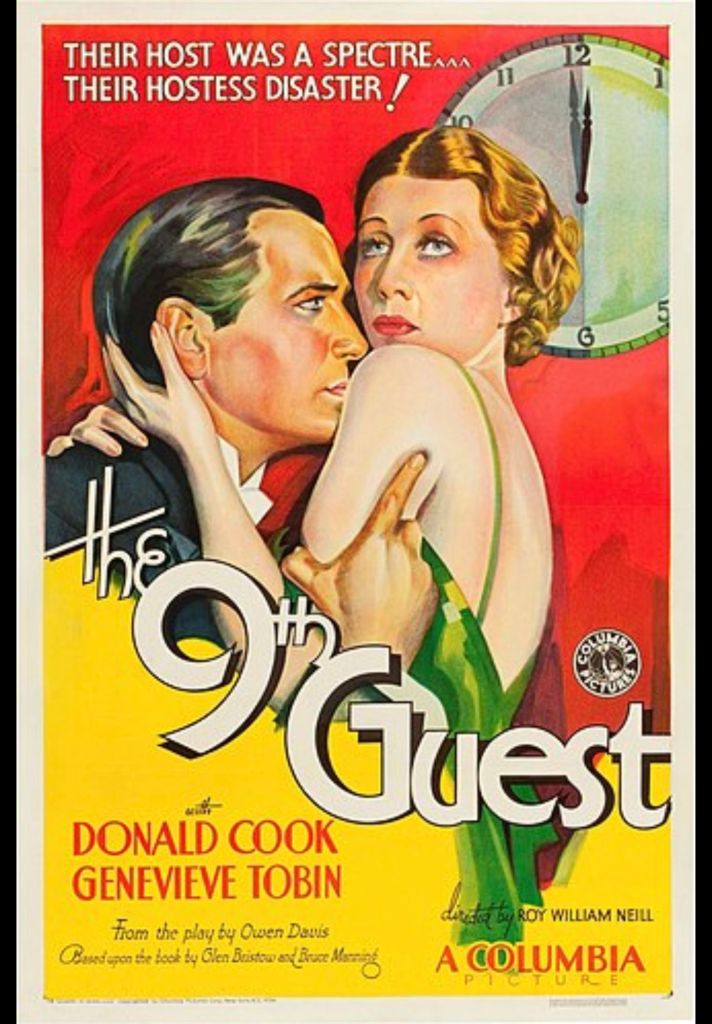
In “The Ninth Guest,” eight strangers are invited to a lavish New Orleans penthouse under mysterious circumstances. Once inside, a voice over the radio announces that they are all guilty of past misdeeds and will be killed before the night ends. The ninth guest, the voice declares, is death itself.
Christie’s “And Then There Were None,” published five years later in 1939, follows a similar structure. Ten individuals are summoned to a remote island, each accused of a crime that escaped legal punishment. A gramophone recording delivers the accusations, and the guests begin to die one by one, following the pattern of a nursery rhyme.
Both stories rely on isolation to build suspense. In “The Ninth Guest,” the guests are trapped in a locked penthouse with no way out. In Christie’s version, the island is cut off by weather and distance. The sense of confinement intensifies the psychological pressure as trust erodes and paranoia sets in.
The unseen host is another shared element. In both films, the killer remains anonymous until the final reveal, manipulating events from behind the scenes. The use of technology—radio in “The Ninth Guest,” gramophone in Christie’s story—adds a chilling layer of detachment.
While “The Ninth Guest” leans more toward theatrical pacing and direct confrontation, Christie’s work delves deeper into moral reckoning. Her characters are haunted by guilt, and the killer’s motive is philosophical: justice for the unpunished. Bristow and Manning’s version focuses more on revenge and survival.
The similarities are so pronounced that many viewers and scholars have speculated whether Christie was influenced by “The Invisible Host.” Though there is no confirmed link, the thematic overlap is undeniable. Both stories explore the consequences of hidden guilt, the fragility of trust, and the terrifying power of anonymity.
“The Ninth Guest” offers a glimpse into the evolution of suspense storytelling. The film serves as a reminder that even lesser-known works can cast long shadows, and that the line between inspiration and coincidence is often as mysterious as the stories themselves.
 Zents Music Studio